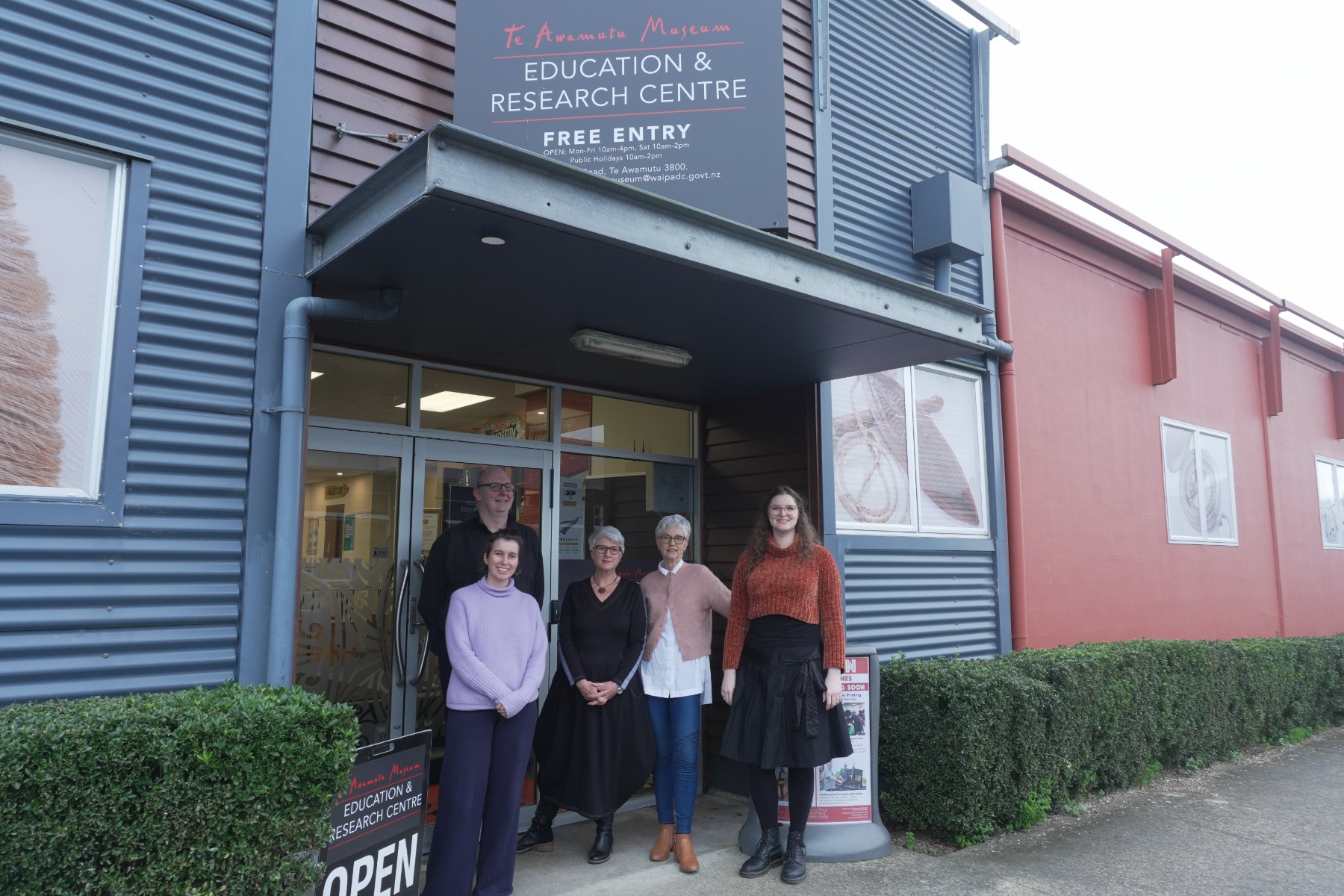
The doors to Te Awamutu Museum Education and Research Centre’s temporary Rickit Road site will close from Monday, July 14 for its move back to its original location on Roche Street.
Museum and Heritage Director Anne Blyth says the team is thrilled to return ‘home’ after a nearly three-year hiatus, with the reopening scheduled for late October 2025.
The Roche Street building was deemed earthquake-prone in October 2022. Since then, extensive strengthening work has been completed, ensuring it is safe for visitors, staff and taonga.
“We’re incredibly excited to move back into our original space and to once again be able to share our collection and services with the community,” Blyth said.
The return means visitors will be able to experience significant Waipā taonga that couldn't be displayed at the temporary site. These include Uenuku, one of the oldest known Māori carvings in Aotearoa New Zealand, dating from between 1200–1500 AD.
“Our taonga play a vital part in telling the story of Waipā’s history,” said Blyth.
Alongside earthquake strengthening, the museum has a new research room, upgraded toilet facilities, new windows and roofing, improved climate control to help preserve and care for artefacts, and better accessibility throughout.
Blyth encourages whānau to visit the Rickit Road site before the closure. “Come along for the last few days of the school holidays and enjoy what’s on offer before we make the move home,” she said.
While the museum is closed, education programmes will continue as usual, and people can enjoy events such as the Matariki Print Workshop at the Te Awamutu Library on Wednesday, July 16. More joint activities with the library are being planned.
You can continue to explore Waipā’s history through Te Ara Wai Journeys www.tearawai.nz and the museum’s online collection at tamuseum.org.nz.
When the museum reopens in October, it will launch with the inclusion of an exciting new touring exhibition from Te Papa - Rūaumoko: Restless Land, which explores Aotearoa’s natural hazards, including earthquakes, floods, and volcanoes.