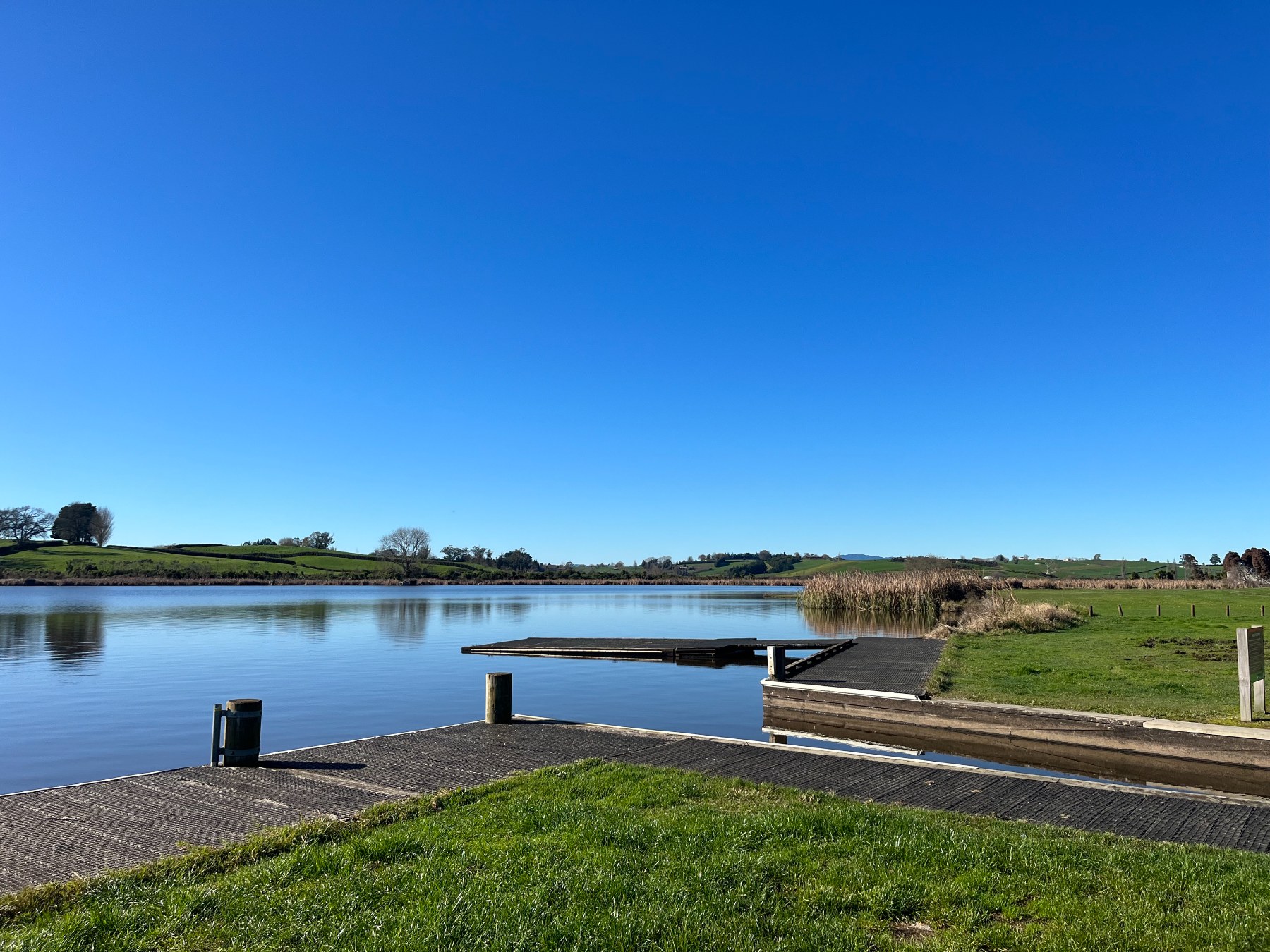
A new plan to restore Lake Ngā Roto has been signed off by Waipā District Council.
The plan, approved at Wednesday’s meeting, sets out how Council, mana whenua and the community will work together to restore the health of the lake, protect its cultural significance, and boost recreational opportunities at the 149-hectare reserve.
Community services manager Brad Ward said a review of the reserve’s management plan began last year, triggered by the significant degradation of the lake’s condition, legislation changes, increased visitor levels and growing recognition of the lake’s cultural importance to mana whenua.
The popular reserve is home to freedom camping, rowing, sailing, and duck shooting. Last year, almost 52,000 people used the walking and cycling track.
More than 70 pieces of community feedback were received on the plan, with strong support for improving the lake’s health, keeping existing dog rules, and investing in better visitor facilities. Mana whenua representatives, Peat Lake Accord partners, adjoining landowners and sport clubs also provided direct input into the plan.
Te Rūnanganui o Ngāti Hikairo representative Lees Seymour said mana whenua and Council had a strong, respectful relationship throughout the project. “The review also enabled Ngāti Apakura and Ngāti Hikairo to come together to work on something that means a lot to us.
"Ngā Roto is a taonga rich in history, it’s where our tūpuna lived and throughout the process, it was clear the whole community values and supports looking after the lake.
“It has been a great process to be a part of, and I think the outcome that we’ve got is fantastic,” he said.
The plan aims to:
- Restore the health and wellbeing of the lake’s freshwater
- Regenerate the peat lake as a thriving indigenous ecosystem contributing to Waipā’s biodiversity
- Recognise and provide for mana whenua connections with the reserve, integrating mātauranga Māori (traditional knowledge) and tikanga (customary practices) into the management of the lake
- Enhance recreational opportunities for a range of users.
Reserve management plans are a requirement under the Reserves Act 1977, and guide the protection, development and use of public reserves.
“Our focus is on looking after what we already have, while meeting our legislative and environmental responsibilities,” said Ward. “This is about honouring the past, respecting the present, and protecting the future of Ngā Roto by working together.”
The objectives of the plan will be implemented through a combination of existing operational budgets, some Better Off Funding relating to water management, partnerships and volunteers, and projects to be considered through future Long Term Plan funding.