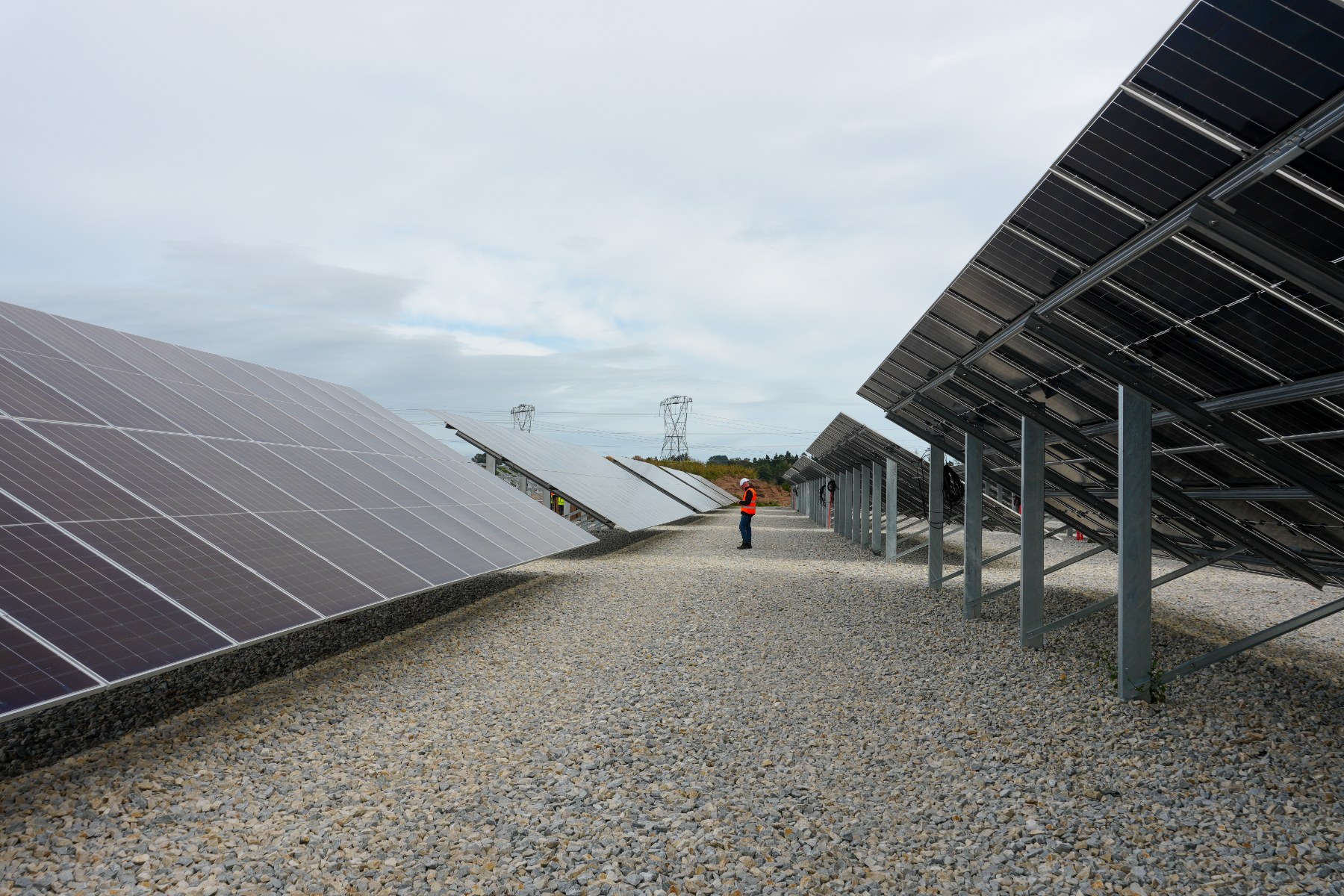
The new $2 million solar farm at Cambridge’s wastewater treatment plant is set to slash power costs and carbon emissions – saving ratepayers money while powering a cleaner, greener future.
The new 1.2-megawatt solar farm will harness the power of the sun to generate enough renewable energy to power up half of the plant’s daily load during daylight hours – cutting emissions and saving costs for ratepayers.
Waipā District Council has teamed up with renewable energy specialists Pacific Energy and Endless Energy to deliver the project, which includes 1,944 high-efficiency panels designed to capture sunlight from both sides for maximum output.
Water services manager Karl Pavlovich said the project is a win-win for the environment and the community.
“This investment will make a real difference for our community – cutting our carbon footprint and keeping operating costs down,” he said.
“The solar farm will pay for itself in about six years, which makes it a smart, sustainable choice for our ratepayers. It’s a great example of how we’re protecting and sustaining our environment, supporting programmes that promote sustainability, and taking real action in response to climate change.”
The panels have been manufactured off-site and are being installed in the now vacant section of the plant near the outfall structure, angled perfectly to capture the most sunlight.
Once operational, the solar farm will provide clean, renewable energy directly to the treatment plant, reducing greenhouse gas emissions and strengthening Cambridge’s energy resilience for years to come.
The wastewater treatment plant is Waipā District Council’s largest infrastructure project, at a total cost of $108.5 million. Construction began in December 2023 and it is on track to be fully operational by this December, on time and under budget.
It will serve Cambridge, Leamington, Hautapu, and Karāpiro - an existing population of approximately 20,000 people growing to an anticipated 50,000 by 2060.